Welcome to One Thing Better. Each week, the editor in chief of Entrepreneur magazine (that’s me) shares one way to achieve a breakthrough at work — and build a career or company you love.
Please forward this newsletter to someone you appreciate! And if you received the forward, please subscribe here.
You almost shared something personal about yourself. Then you stopped.
Maybe it was a post you drafted and deleted, or a story you decided not to tell in a meeting. Maybe someone asked you a question, and you gave the safe answer instead of the true one.
Why?
I think we have a complicated relationship with ourselves. We want to be understood, but we don’t want to be seen as braggy or self-absorbed, or perhaps we’re just feeling reserved. So we withhold ourselves, unsure of what’s appropriate to share.
But I want you to know something: You are often the most valuable thing you can offer another person. You are the thing that builds trust in your company or product. You are what others want to know about, and to connect with.
Don’t believe me? Today, I want to take you back nearly 200 years — to the time when people first had to learn this. It’s a lesson we can all still learn from.
The letter-writing crisis of the 1840s
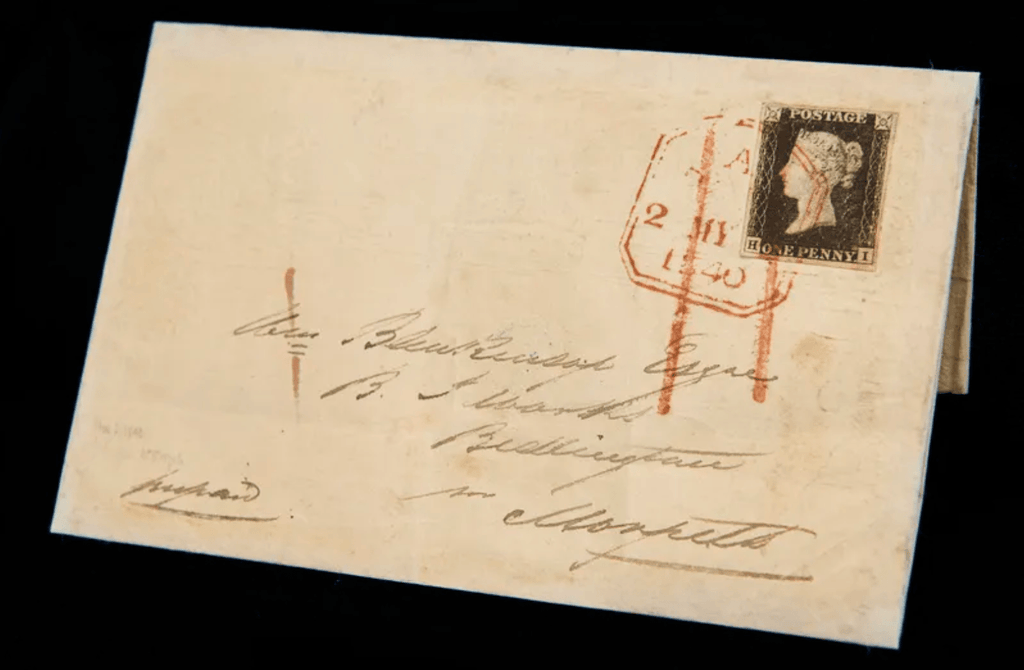
Caption: The first-known piece of mail to be sent using a stamp, 1840. Source.
Before the 1840s, only wealthy people could afford to send a letter. Then the price dropped, and regular people could write to each other too.
But they had no idea what to say.
Americans were religious, and had been taught that vanity is a sin. So when people sat down to write — to friends, to family, to lovers — they often didn’t know what to say. What do you write about, if it’s shameful to write about yourself?
As a result, their letters were full of anxiety. If they got personal, they apologetically tiptoed into it. For example, a Kansas man named Allen White wrote his future wife. But before sharing some background on himself, he prefaced:
“You did not ask me for my history, but I concluded to volunteer, trusting that you will not deem it improper or egotistical in me.”
That’s the modern-day version of “who cares about me?”
Then, everything changed…
Etiquette writers to the rescue
Etiquette guides used to be popular in America. They explained what was appropriate, and how to act properly. And starting in the 1840s, these guides started to help people write letters.
Their message must have seemed radical: Sharing about yourself is not vain, they said. Instead, not sharing about yourself is selfish!
Here’s an example. This comes from an 1857 book called Happy Homes and Good Society. (Fun side note: This book was written by Sarah Josepha Hale, who also authored the nursery rhyme “Mary Had A Little Lamb” and helped make Thanksgiving a holiday. Incredible career.)
Here’s what she wrote…
You who cannot take time from your own enjoyment to send a loving word to your dear ones at home, to tell them of your happiness, can scarcely put yourself in their place, realize their anxiety on your behalf, or what brightness you may bring to them by an animated, graphic sketch of what you may be passing through at the moment; thus enabling them to become sharers of your pleasure, and to follow you in spirit through your wanderings.
She’s right, isn’t she? When you hear from an old friend, don’t you want to know about their lives? Isn’t it satisfying to hear what they’re up to?
Thoughts like these shaped our modern understanding of personal sharing. To the right people, our personal updates are gifts.
Now here’s the important thing to know: The “right people” is a much broader category than you think.
How this applies today
Let’s be clear: Not all sharing is good.
It can be TMI. Or inappropriate. You don’t have to share everything. And we all know people who make everything about themselves, which is exhausting.
But you can still share a lot, and not become that person.
Here’s how:
Before you share anything personal — whether it’s online, in a group, or just with another person — simply ask yourself: “Will this information bring us closer together?”
I love that question for two reasons:
- It forces you to start with your audience. You prioritize what they need, and what feels right to them.
- It makes you consider the outcome. What are you driving towards, by sharing something? What do you want to happen?
For example: People trust people, not brands. So if you’re a founder, your personal story can help build trust with customers. When customers see themselves in you, they think, “This person is just like me, but they’ve also built something for me.”
This doesn’t mean you should tell them everything about you. But think about the parts that resonate with them. What part of your story, or your experience, will bolster their trust in you?
This is also the key to great personal branding. It’s not about you. It’s about your audience! Start by asking: “Who do I want to reach, and what will they find helpful?” Now share, drawing from your personal and professional experiences. People will recognize and appreciate you.
This is also a great approach for one-on-one connections. Have you ever had a business meeting, and then dropped in some compelling personal information? I do it all the time, and it always brightens conversation. Suddenly people come alive. They get invested in me. The relationship (and the deal!) gets stronger.
It’s all part of a pattern: Yes, you’re talking about yourself… but you’re starting with what someone else wants. That changes everything, because it’s no longer about ego. It’s about them. Just like the 1800s etiquette guides said.
Now, one final important note:
The outcome must be honest
A moment ago, I talked about the “outcome” you want from sharing. I realize that could sound strategic in a cold or manipulative way — as if sharing yourself is just another tool in your toolkit.
So here’s an important caveat: This only works if you’re genuine.
I might meet someone and want to get to know them better. Or I might enjoy working with a client, and want to strengthen that relationship. Or I might want my customers to better understand me, to drive longer-term relationships with them. These are desired outcomes, and it’s good to identify and want those things!
But you must get there by being real. You must care about that client. You must love your customers. You must want the closeness that comes from this sharing.
People can feel when you’re being real, and when you’re not.
This newsletter is a perfect example, actually.
I sometimes get personal here, sharing stories from my life. Why? You could argue that it’s strategic: My readers feel a greater attachment to me when I get personal. My inbox always blows up whenever I share a failure or personal struggle. That’s good for business! It means people will subscribe longer.
But I also just really like doing it. I like the personal connections that come from this newsletter. I’m so grateful when people write me, sharing their own personal experiences. And I feel honored that anyone would want to open a weekly email from me.
The point is: When you’re doing this right, it doesn’t just feel like you’re giving something of yourself. It feels like you’ve created an exchange of gifts: You’ve given something of yourself, and you receive something of equal value in return.
When you send, you receive. Just like writing a letter.
That’s how to do one thing better.